
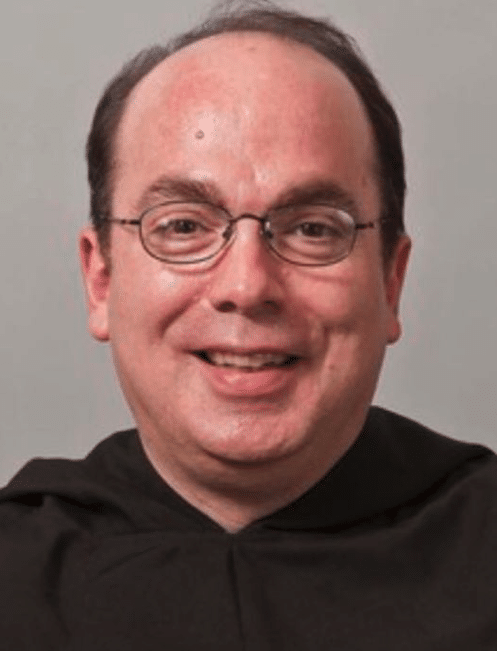
Francis J. Caponi, O.S.A.
Villanova University
Villanova, Pennsylvania
Readings
Deut 8:2-3, 14b-16a
Psalm 147:12-13, 14-15, 19-20
1 Cor 10:16-17
John 6:51-58
The Roman coin mentioned in today’s gospel was called a denarius, the most common coin
in circulation at the time of Christ. The coin was made of silver, and bore the image of a political
leader (probably the emperor Tiberius), just as many of our own coins do (e.g., the Lincoln penny
and the Roosevelt dime). The techniques for coin-making were not so advanced as our own, and
so the image was likely not quite so clear nor quite so centered as we are used to, nor the coin
itself quite so round; yet none of us would mistake it for anything but a coin.
But the denarius handed to Jesus would have differed from any coin we have in our pockets
right now in two significant ways: It carried no date, and it bore no denomination.
We are of a culture in which many wristwatches, and every cell phone and computer, tells us
the day, month, and year. Who among us has written a check without putting the date on it, or
received a credit card statement that did not include the date of our purchases? But the ancient
world possessed no uniform global calendar. Events and documents were often dated by who was
in charge, as we know from the Gospel according to Luke: In those days a decree went out from
Caesar Augustus that the whole world should be enrolled. This was the first enrollment, when
Quirinius was governor of Syria (Luke 2:1-2). So no coin would ever be stamped “A.D. 64,”
because no one used that calendar in the first century!
In additon, the denarius handed to Jesus would not have any numerical value on it, no 1, 5,
10, or 25, as we see on our coins. That is because the value of Roman coins was relative,
fluctuating with the relative values of the precious metals (bronze, silver, and gold) from which
they were made. Every denarius would be roughly the same weight, and so roughly the same
value, but it was not precise.1 Today, any coin (or bill) without a date would immediately be
recognized as a poor forgery.
The coin handed to Christ today had no date and no denomination. Jesus holds it up and says
to the crowd, “These things you can give to Caesar. These bits of metals of changing value,
struck last year or ten years ago, these you can use to pay your debts to the men who rule this
world. But not your heart. That has absolute value. That can be given to no one but my Father,
who has pressed His own image upon you, who has stamped every one of you with infinite
value.”
We have a worth that does not vary. Even when we sin, our value does not change. Even
when we spend our time in worthless ways, pursuing profit without honor and pleasure without
restraint, our value does not change. Even when our lives are worn down with sickness and bent
with cares, our value does not change.
We have been stamped with the image of God. Like an earthy coin, that image can grow
faint; so while our sins do not make us less valuable to God, they do obscure and deface the royal
image we bear. But in Christ we are newly minted. As St. Augustine writes, “We are God’s
money. But we are like coins that have wandered away from the treasury. What was once
stamped upon us has been warn down by our wandering. The One who restamps his image upon
us is the One who first formed us. He himself seeks his own coin, as Caesar sought his coin….
[So give] to Caesar his coins, to God your very selves.”2
Jesus was wise in using money to teach this lesson on the hard limit of earthly allegiance.
Money engages our passion. To speak of taxes is always to elicit strong opinions (and never more
so than in an election year). Money: Who has it, who doesn’t, how to get it, how to get more, and
how to protect it – these are questions which demand and receive serious deliberation and careful
planning. Now comes Jesus to us, asking, “Do you think so hard and so long about what you owe
to my Father, as you do about taxes? Do you try to get away with giving your Maker as little as
possible, as you do when paying taxes to the rulers of this world? Do you grumble and evade and
begrudge giving the Lord what he is owed, as you do giving the empire what it demands?”
1“Ancient Roman Currency” http://www.crystalinks.com/romecoins.html
2Tractates on John, 40.9.
-2-
How often have we said to ourselves, “I’ll remember to bring something for the poor box
next time”? “I’ll be better about taking care of the poor when Thanksgiving comes”?
How often do we trust that God will shower us with mercy, while we dole out our
forgiveness to others with an eye dropper?
How often do we beg God for good things on credit, without interest, with no repayment
schedule and no late fees – but then insist that we must be payed in full, on demand, what we are
owed by a friend or family member or neighbor?
We are God’s money, not meant to be hoarded in a bank or buried in the earth, but given with
open hands to the poor, spent in the care of the wounded and abandoned, distributed both to
those who have loved us much and those whom we do not know.
We are the Lord’s own treasure, and our lives have been bought at the price of Christ’s blood.
God expects a return on His investment: the naked must be clothed, the prisoner must be visited,
the dead must be buried and prayed for, the lost must be shown the way back to Christ.
Through the prophet Isaiah, God says to us: “I am the LORD, there is no other.” No one else
has a claim on all that we are. The dates and amounts and numbers and percentages and dues and
accounts of this world have their importance, but it is not ultimate. There comes a day – who can
say how soon? – when each of us will stand before the Lord and give an account of our
stewardship of His gifts. There comes a day – who can say how soon? – when coins will melt and
bills will burn and jewels will be crushed into powder and gold will boil into steam and be lost.
When all the wealth of this world passes away, along with the privileges and protections it
provides, we will carry into eternity only that treasure we have already laid up in heaven. Such
treasure we acquire by spending ourselves in worship of the Trinity, love for our families and
friends, and service to those in need.
